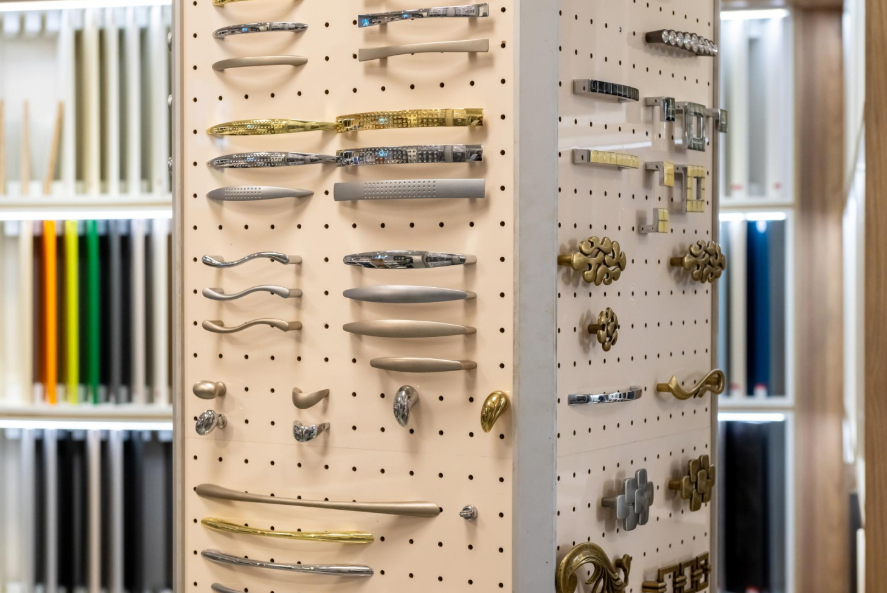

How Location Impacts Your Door Hardware: An Australian Guide
Why the same handle can last 25 years in Dubbo and fail in 18 months at Bondi, and how to pick the right one for your postcode.
That gleaming brand new door handle may look fantastic on day one - but give it a couple of summers at the coast and that beautiful finish can quickly go from spotless to stained, pitted and a touchy latch that just never seems to close quite right. We see it time & time again: hardware that's had no trouble withstanding decades of use in Parramatta suddenly failing in months in Bondi, all because no one took the trouble to match the metal to the local climate.
And this is no small issue. The Australasian Corrosion Association reckons corrosion is costing Australia a whopping $78 billion every year - that's roughly in line with international figures which put the global cost at 3.5 to 5.2 per cent of GDP. Your front door may be a tiny fraction of that number, but the same corrosive forces eating away at those big-ticket items like bridges are at work on your front door too.
So before you order anything, what's the simple answer for where you live? Below that, we'll lay out the science & standards behind our response - so you can be your own judge rather than just taking our word for it.

The Quick Answer: What to Buy for Where You Live
Before diving into the technical reasons, here is the direct answer to your most pressing question: What should I buy based on where I live?
| Where you live | What the environment throws at your hardware | Typical humidity picture | What to specify |
|---|---|---|---|
| Surf Coast (Bondi, Gold Coast, Newcastle, Wollongong) | Airborne salt from breaking surf; AS 4312 rates the first 50 m from the shore as CX (extreme), easing to C4 around 500 m to 1 km | Sea breezes keep coastal air moist for long stretches, so metal surfaces stay wet longer | Grade 316 stainless steel, or solid brass with a PVD finish Recommendation: Knurled Door Handle |
| Tropical north (Cairns, Darwin, Townsville) | Sustained heat plus a long wet season; mould and tarnish risk on top of corrosion | Darwin averages roughly 70–80% relative humidity through the wet season (BOM, Darwin Airport station 014015) | Solid brass, or PVD-coated architectural alloys Recommendation: Victorian Door Handle |
| Inland and regional (Parramatta, Dubbo, Canberra) | Low airborne salt; AS 4312 puts most areas beyond 10 km from surf in C2–C3 (low to medium) | Drier air for most of the year; surfaces spend far less time wet | Grade 304 stainless, standard zinc, or matte black finishes all hold up well Recommendation: Simply Door Handle Collection |
One caveat worth flagging early: distance from the shoreline matters more than most people expect, and AS 4312 notes that salt can travel further inland where the terrain is flat and onshore winds are strong. If you're between zones, specify the harsher one. The price difference between Grade 304 and 316 hardware is small compared with replacing every handle on the house.
AS 4312:2019 — The Standard That Maps Australia's Salt
Australia has some of the harshest coastal environments anywhere, which is why Standards Australia publishes AS 4312:2019, Atmospheric corrosivity zones in Australia. It classifies the whole country into corrosivity categories from C1 (very low) up to CX (extreme), aligned with the international ISO 9223 framework. The categories aren't abstract labels — each one corresponds to a measured range of how quickly bare metal loses thickness.
The numbers below, drawn from AS 4312 and summarised in NATSPEC's technical note on atmospheric corrosivity, show why suburb-level thinking matters:
| AS 4312 category | Typical Australian setting | Mild steel corrosion rate (first year) |
|---|---|---|
| C2 (Low) | Dry rural and inland areas, generally 50 km or more from the sea | 1.3–25 micrometres per year |
| C3 (Medium) | Urban areas and coastal fringes roughly 1–10 km from surf beaches | 25–50 micrometres per year |
| C4 (High) | Around 500 m to 1 km from a surf coastline | 50–80 micrometres per year |
| C5 (Very high) | 100–500 m from surf; sheltered seafront areas | 80–200 micrometres per year |
| CX (Extreme) | Beachfront — within about 50 m of breaking surf | 200–700 micrometres per year |
Read that last line again . Beachfront steel can corrode at a rate of 200–700 micrometres a year - many hundreds of times faster than the same metal would be in some inland town that's dry as a bone. That's what the difference between Bondi & Dubbo boils down to in one neat table, & it's why a supposedly 'stainless' handle that works a treat in Western Sydney is showing tea-staining after just a few months by the beach.
For Sydney in particular - AS 4312 calls the surf coast (ie you know , Bondi, Bronte, Manly) CX to C5 for the first hundred metres or so from the water, drops down to C4 out to about a kilometer from the coast & C3 from 1 to 10 km inland. While Parramatta - over 20km from the surf - is sitting pretty in C2–C3 country. Same city – totally different demands on your front door hardware.
Material Selection: What Actually Survives?
You can't argue with the weather, but you can outsmart it with chemistry. Here's how the main contenders stack up.
Solid brass
The traditional choice for humid climates, and for good reason: brass doesn't structurally rust. Instead, it develops a patina — a stable surface layer that protects the metal underneath. Some owners love the aged look; if you don't, a PVD finish (more on that below) locks in the factory colour.
Stainless steel
Stainless steel door handles, when made with the right grade of material, can provide excellent corrosion resistance while delivering strong and reliable performance. And in standardised salt-spray testing, 316 grade for example, typically lasts three to five times longer before corrosion appears. If you're within a kilometre or two of surf, 316 isn't a luxury; it's the sensible minimum.
Perhaps take a look at our Simply Door Handle Collection?
PVD coatings
PVD stands for Physical Vapour Deposition: a vacuum process that bonds the finish to the metal at a molecular level rather than sitting on top like paint or plating. Because there's no film to lift, PVD finishes don't peel, chip or bubble through seasonal humidity swings, and they shrug off salt and skin oils far better than traditional electroplated chrome.
The Humidity Threshold - when decay really starts getting under way
Relative humidity - the amount of moisture in the air as a percentage of how much it can possibly hold at that temperature - is a bit of a wild card. Warm air can hold loads more water than cold air, which is why the reading jumps all over the place even when the actual moisture hasn't changed one bit, and why dealing with tropical air is a nightmare for metal.
Corrosion scientists (those who work with the same framework as ISO 9223) are really focussed on the 'time of wetness', which is just how long a metal surface spends with a tiny layer of moisture clinging to it that you can't even see. Below about 50% relative humidity, this film usually doesn't form and metal gets to stay pretty stable. But when you get up to around 60%, the moisture starts to start binding to the surface and you get slow electrochemical reactions taking off. Push it past 70% and you start getting into real trouble: the water film acts as a bit of an electrolyte, teaming up with oxygen and any salt that's settled to drive pitting and let mould start growing on and around your doors.

And then there's temperature to consider. As a rough thumb rule in chemistry, reaction rates roughly double for every 10°C you go up - which pretty much explains why hardware degrades so much faster in a Darwin wet season, where the humidity just sits there at 70-80% for months, than in a nice, mild Melbourne summer.
And then there's salt, which basically turbocharges the whole process. Salt crystals are super good at sucking moisture out of the air and holding onto it, which means that a salt-crusted handle can stay effectively wet for ages after the sea breeze has dried everything else. That's the mechanism behind those fast failures we see on coastal hardware that hasn't been washed for ages.
Maintenance : Super Simple Habits That Can Double the Life of Your Hardware
Even metal as tough as marine-grade stuff can benefit from a little TLC - and it's simpler than you think. Follow this super quick routine and you'll catch the chemical process before it can cause any harm.
• Just give your hardware a gentle wipe down with freshwater, monthly if you live by the coast. Use a soft microfibre cloth that's just dampened with water to get rid of all that dried salt crust off the handles. If you live inland, you might be able to stretch it to every 3 to 6 months and skip all those harsh chemical cleaners that just strip off the protective coating that came with your hardware.
• Season it a couple of times a year. When your hardware is clean, apply a thin coat of non-abrasive wax. This creates a water-repellent layer that stops moisture from just sitting on the surface and makes it bead and roll off instead.
• Keep an eye on the humidity at home - ideally keep it in a range of 30 - 50% relative humidity. Down in the tropics you'll probably need a dehumidifier or some air-con going to keep the corrosive and mouldy stuff from taking over - just factor in the extra cost when you're paying for it in the wet season
• Just make sure there's some air moving about. Getting a bit of cross breeze going at entry doors reduces the time moisture gets to stick around, keeps your internal springs and latches from getting all rusty and stiff too.

Extended Reading: How to Clean Brass Door Handles: A Simple Guide
Frequently Asked Questions
Will 'stainless' steel rust if I live near the beach?
Grade 304 will, yes — expect brown surface tea-staining within months and pitting within a few years of salt-air exposure. The fix is to specify Grade 316 (marine-grade) stainless steel or PVD-finished hardware. The molybdenum in 316 is what makes the difference; it's absent from 304 entirely.
What is a PVD finish on door handles?
Physical Vapour Deposition — an advanced vacuum-coating process that fuses the finish to the base metal at a molecular level. Unlike a plated or painted layer, there's nothing to peel or flake, which makes PVD highly resistant to salt, sweat and humidity.
How often should I clean coastal door hardware?
For external handles within about 5 km of surf, wipe them down with fresh water once a month to remove corrosive salt. Inland, every three to six months is plenty.
How do I find my property's corrosivity zone?
Check your distance from the nearest surf coastline against the AS 4312 categories above, and look up your local humidity averages on the Bureau of Meteorology's climate statistics pages. If you're on a boundary between categories, specify the harsher one.
Making the Right Choice
Luxury design needs technical foresight behind it — the most beautiful handle in the showroom means nothing if the metal gives up within its first year on the door. Match the material grade to your actual AS 4312 zone and local humidity profile, keep up the simple wash-and-wax routine, and your hardware will still look the part decades from now.
Our specification team analyses property profiles like this every day. If you'd like a hand matching hardware to your postcode, visit Luxhandles and we'll point you to metal that's genuinely built for where you live.
Sources and Further Reading
-
Standards Australia, AS 4312:2019 Atmospheric corrosivity zones in Australia.
-
Bureau of Meteorology, Climate statistics for Australian locations — Darwin Airport (station 014015).
-
Bureau of Meteorology, Average 9 am and 3 pm relative humidity maps.
-
The material recommendations (316 for coastal, brass for tropical, 304/zinc inland) rest on ASTM A240/A240M for the 316 composition (the 2–3% molybdenum): https://www.astm.org/a0240_a0240m-25.html
-
NATSPEC TECHnote DES 010, Atmospheric corrosivity categories (corrosion-rate ranges by category).